Hygie | Mobile App
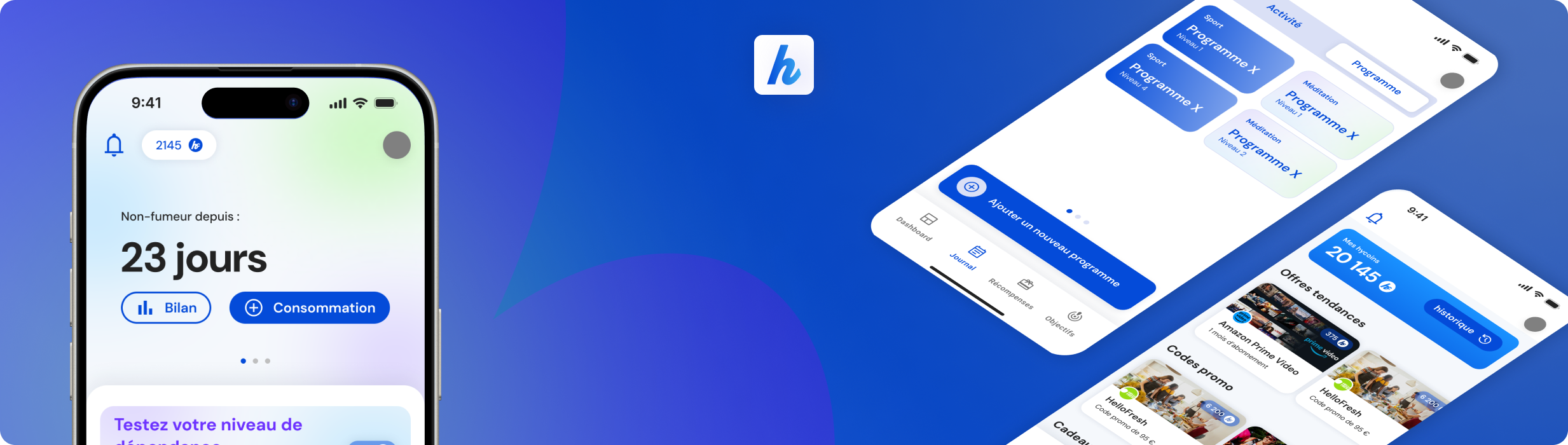
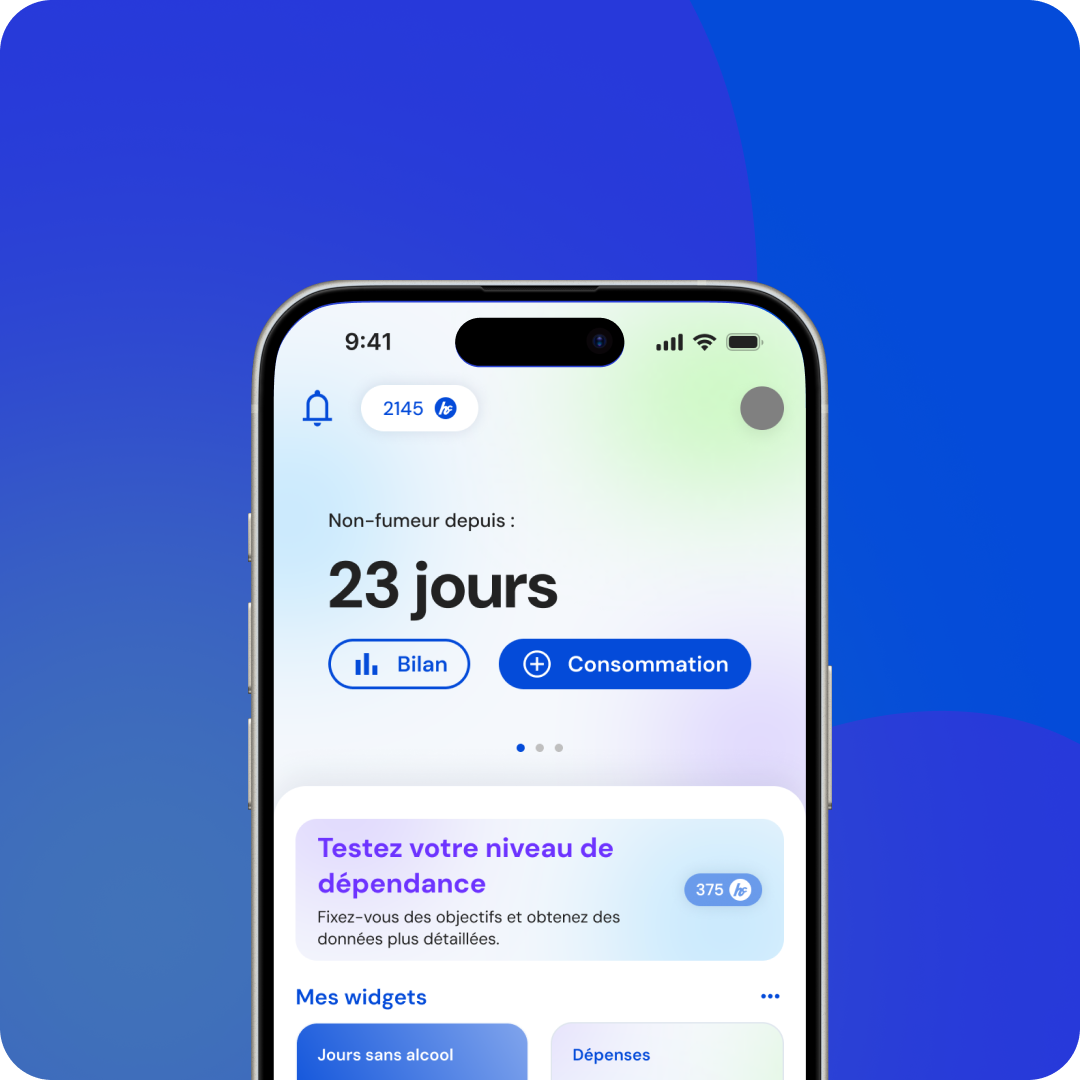
Hygie is a mobile application designed to support users in reducing addictive behaviors such as smoking, alcohol, or sugar consumption. The app combines personalized tracking, adaptive goals, and a motivation system built around rewards and professional support. Its purpose is to help people take small, achievable steps toward better health through a guided and compassionate approach.
Beyond simple monitoring, Hygie introduces a gamified experience that transforms progress into positive reinforcement. Each user follows a personalized journey where challenges, achievements, and milestones are used to maintain engagement without creating pressure or guilt. The interface has been designed to be both reassuring and motivating, encouraging users to stay consistent and feel supported throughout their journey.
Ultimately, Hygie aims to redefine how we approach wellness and habit change by making the process more human, encouraging, and enjoyable.
Context & problematic
Hygie was developed as part of a long-term collaborative project involving designers, developers, and a marketing strategist. The team’s objective was twofold: to create an engaging and intuitive product for users seeking to overcome addictions, and to establish a structured, product-driven workflow that reflected real-world development practices.
The growing number of mobile wellness applications highlights a common issue. Many focus on tracking or performance but fail to sustain user engagement over time. They often rely on rigid metrics or overwhelming reminders, which can discourage rather than empower. Our goal with Hygie was to design an experience that felt genuinely supportive, combining empathy, playfulness, and measurable progress.
The central question we set out to answer was:
How can gamification be integrated intelligently to motivate users without causing frustration or disengagement?
This question guided our entire design process, from early research and ideation to interface design and prototyping.
Role & responsability
As a Product Designer UX-UI, we was involved in every stage of the design process, from initial research to final interface delivery. My work focused on understanding user needs, defining key functionalities, and designing a consistent visual and interactive experience that aligned with the project’s objectives.
We conducted quantitative research to identify user motivations and barriers, created personas, and structured the information architecture. Based on these insights, we developed user journeys and low-fidelity wireframes to define the core experience. we then built a modular design system, and created high-fidelity mockups and interactive prototypes in Figma.
Close collaboration with my design partner was essential to ensure visual coherence and a smooth user experience across all interactions. Together, we refined animations, transitions, and component behaviors to strengthen the app’s sense of engagement and continuity.
Design process
The design process for Hygie was structured around three main stages: understanding users, shaping the experience, and creating an engaging interface. Each step was guided by continuous testing, iteration, and team collaboration to ensure that every design decision was grounded in real user insights.
1. Understanding the users
We began with a quantitative survey targeting adults aged 25 to 40 to better understand their habits, motivations, and challenges related to addiction management. The data collected helped us identify key behavioral patterns and pain points, which served as the foundation for our design strategy.
2. Structuring the experience
Based on our research, we created personas to represent different user profiles and established a clear information hierarchy. We then defined the core user journeys, focusing on essential features such as consumption tracking, goal setting, and rewards. This stage allowed us to map out the overall navigation flow and ensure a smooth, intuitive experience.
3. Designing an engaging interface
We started with low-fidelity wireframes to explore layout options and interaction logic. Once validated, we moved to high-fidelity mockups and an interactive prototype built in Figma. We implemented a modular design system with scalable variables to maintain visual consistency and support future product evolution.